The short answer
If your home feels dusty, stuffy, or smells musty when the system runs, the cause is often a poor filter, a dirty coil or blower, a clogged drain, or leaky ducts. EverClime inspects the whole air path, explains what is wrong, and offers options ranging from simple repairs and cleaning to filtration, humidity, or ventilation upgrades.
Indoor air quality is about what you breathe at home: dust, pollen, smoke, moisture, odors, and fumes from cooking and cleaning. Your heating and cooling system moves the air in your house many times a day, so it can either help clean that air or keep spreading the problem from room to room. EverClime HVAC Contractor inspects, repairs, and upgrades the parts of your HVAC system that affect air quality for homes in Los Angeles and nearby cities. We look for the actual cause before recommending anything, and we explain what we find in plain terms so you can decide what makes sense for your home.
Signs Your Home Needs an Air Quality Check
Air quality problems usually show up as small annoyances before they become obvious. Los Angeles adds its own challenges. Summers are dry, fall Santa Ana winds can push dust and smoke indoors, and in inland valleys air conditioners run hard for months. Call us if you notice any of these signs:
Not every symptom points to the HVAC system. Sometimes the source is a leaky window, a bathroom without a working exhaust fan, or new furniture or flooring. Part of our job is telling you when the fix is not in your equipment or ductwork.
- Dust that settles on furniture within a day or two of cleaning
- Allergy or asthma symptoms that are worse indoors than outside
- Musty, stale, or burning smells when the system turns on
- Dust or dark streaks around supply vents and return grilles
- Rooms that feel stuffy even when the temperature is comfortable
- Smoke odor that lingers long after a wildfire or a windy day
- Water stains, condensation, or mold near the indoor unit or ducts
- A filter that looks clogged long before its scheduled change
What We Check During an Air Quality Visit
An air quality visit is an inspection of the whole air path, from where air enters your system to where it comes out in each room. Depending on your setup, we check:
We note what we find and take photos where it helps, so you can see the same thing we see.
- Filter type, fit, and condition, including gaps that let air bypass the filter
- Return grilles and the return plenum for dust buildup and air leaks
- The blower wheel and motor for dirt that cuts airflow and spreads debris
- The evaporator coil and drain pan for buildup, standing water, and growth
- The condensate drain line for clogs or slow drainage
- Accessible ductwork for disconnected, crushed, or leaky sections that pull in attic or crawl space air
- Airflow at registers to see whether each room gets the air it should
- Indoor humidity and how well the system removes moisture while cooling
- Fresh air ventilation, if your home has it
- For gas furnaces, the heat exchanger, flame, and venting, plus whether you have working carbon monoxide alarms
Repair, Upgrade, or Replace
Many air quality problems are solved with repairs and cleaning rather than new equipment. Clearing a clogged drain line, cleaning a dirty coil or blower, sealing leaky duct connections, or switching to a filter that actually fits the slot can make a noticeable difference on its own.
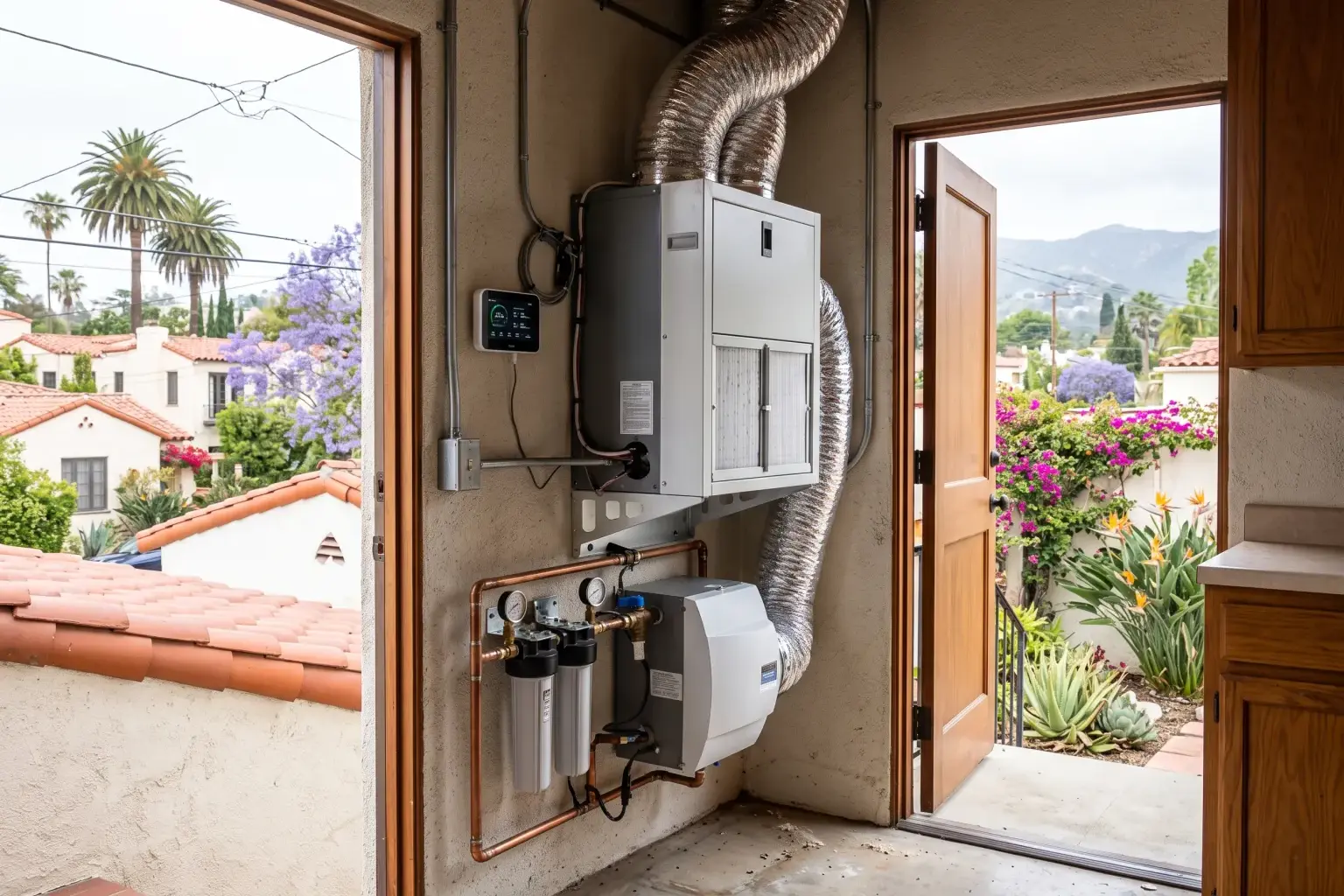
Upgrades make sense when the existing setup cannot do the job. Common options include a media filter cabinet that holds a deeper, more efficient filter, an air cleaner added to the system, a dehumidifier or humidifier where moisture is a real issue, or a ventilation system that brings in filtered outdoor air in a controlled way. We match the option to the problem and to what your blower can handle, because a filter that is too restrictive can strain the system and reduce airflow.
Replacement is the bigger step. Badly damaged, moldy, or poorly designed ducts may be better replaced than patched. If your furnace or air conditioner is near the end of its life, it can make sense to plan air quality upgrades together with the new system. For gas furnaces, South Coast AQMD Rule 1111 limits emissions from new furnaces installed in this region and is being revised toward zero-emission requirements, so check the current rule before replacing one. If you are considering a heat pump, LADWP customers may be able to apply for a rebate after installation, while homes served by Southern California Edison have different options. We confirm what applies at your address before quoting it. The federal tax credit that once covered heat pumps does not apply to new installations.
What Affects the Cost
We give you a written quote after the inspection. The price depends on what is actually wrong and what it takes to fix it. The main factors are:
We explain each item on the quote and tell you which ones are urgent and which can wait.
- Whether the work is a repair, a cleaning, an add-on upgrade, or a replacement
- How easy it is to reach the equipment and ducts, such as tight attics, crawl spaces, or closets
- The size of your home and the length and condition of the duct system
- The type of filter, air cleaner, or humidity equipment you choose
- Whether electrical work, new drain lines, or sheet metal changes are needed
- Any permits the work requires
- Rebates that may apply, which depend on your utility and the equipment
How a Visit Works
Here is what to expect when we come out:
Before we leave, we also show you how to check and change your filter and what to watch for between visits, so small problems do not build up again.
- You tell us what you are noticing and when it happens, such as worse at night, right after the AC starts, or during windy weeks.
- We inspect the system and air path, check airflow and humidity, and look at the filter, coil, blower, drain, and accessible ducts.
- We walk you through what we found, with photos when useful, and explain the likely causes.
- You get a written recommendation with options, from simple fixes to upgrades, so you can choose what fits your home.
- If you approve the work, we complete it or schedule it, then recheck airflow and system operation when we are done.