The short answer
Schedule heating repair if your system blows cool air, shuts off and restarts repeatedly, makes new noises, or gives off a burning smell beyond the first run of the season. EverClime finds the actual fault, gives you a quote before any work starts, and helps you weigh repair against replacement, including current air quality rules and utility rebates.
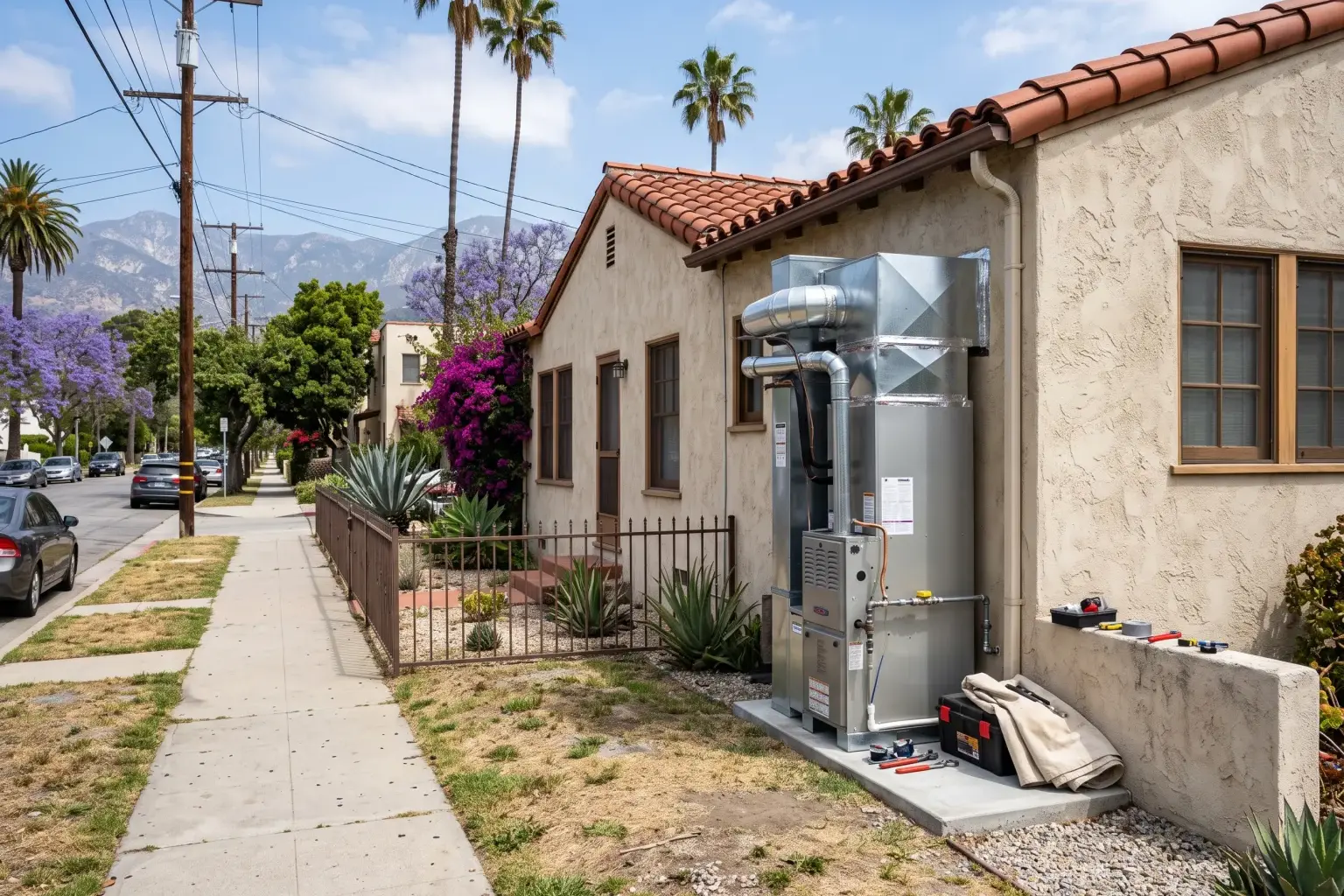
In Los Angeles, a heater can sit unused for most of the year, then get switched on during the first cold night in the valleys or a damp week near the coast. That long idle stretch is often when problems show up: dust burning off the heat exchanger, a flame sensor coated with residue, or a thermostat that no longer communicates with the equipment. EverClime HVAC Contractor repairs gas furnaces, heat pumps, and wall and floor heaters for homeowners across Los Angeles and nearby cities. This page covers the warning signs to watch for, what our technicians check, how we help you decide between repair and replacement, what affects the cost, and what to expect from a service visit.
Signs Your Heating System Needs Repair
Mild winters mean many homes rely on heat only a few weeks a year, so small issues can go unnoticed until you actually need warmth. Schedule service if you notice any of the following:
A brief dusty smell on the first cold day is normal as the system burns off dust that settled over the summer. If the smell lingers or smells electrical, turn the system off and schedule a visit.
- The system runs but blows cool or lukewarm air from the vents
- The furnace starts, shuts off after a few minutes, and repeats the cycle
- Some rooms stay cold while others get too warm
- Banging, rattling, squealing, or loud clicking when the heat comes on
- A burning smell that lasts beyond the first few minutes of the season
- A yellow or flickering burner flame instead of a steady blue one
- A blank thermostat display, or a system that ignores setting changes
- Your carbon monoxide alarm sounds, or people in the home get headaches or nausea that ease when they leave. In that case, get everyone outside and contact your gas utility or emergency services before calling us
What We Check During a Heating Repair Visit
A heating repair visit starts with diagnosis, not parts. Our technician confirms what is actually failing so you are not paying to replace components that still work. Depending on your system type, we typically inspect:
Before leaving, we run the system through a full heating cycle to confirm the repair holds and the home is warming the way it should.
- Thermostat wiring, settings, and batteries, and whether the call for heat reaches the equipment
- Igniter, flame sensor, and burners on gas furnaces
- Gas pressure and flame pattern
- Heat exchanger condition, looking for cracks or corrosion that could let combustion gases escape
- Venting and flue connections for blockages, gaps, or disconnected sections
- Blower motor, capacitor, belt, and blower wheel
- Limit switches, pressure switch, and control board error codes
- Air filter condition and return airflow
- Duct leaks or disconnected runs in the attic or crawlspace
- On heat pumps: reversing valve, defrost controls, refrigerant circuit, and outdoor coil
Repair or Replace: Weighing Your Options
Most heating problems are repairable, and a single failed part on an otherwise sound system usually makes repair the sensible choice. Replacement becomes worth discussing when the heat exchanger is cracked, when major components are failing one after another, when parts for an older unit are hard to find, or when the system has never kept the house comfortable. We explain both paths in plain terms and let you decide.
If you are considering a new gas furnace, know that South Coast AQMD Rule 1111 limits nitrogen oxide emissions from natural-gas central furnaces sold and installed in the Los Angeles region, and the district has been amending the rule toward zero-emission requirements. The district sets and revises the compliance dates, so check the current rule before planning a replacement. We can walk you through what applies to your situation.
Many homeowners use a replacement decision to look at an electric heat pump, which handles both heating and cooling. That can be useful in inland neighborhoods and valleys where summers run much hotter than near the coast. LADWP residential electric customers can apply for Consumer Rebate Program rebates on qualifying heat pump systems, with the amount based on the unit's SEER2 and HSPF2 ratings. The application is filed after the equipment is purchased and installed, within 12 months of purchase. Many homes outside the City of Los Angeles are served by Southern California Edison instead, so available rebates depend on your utility, and we confirm the current offer before quoting it. Also note that the federal Energy Efficient Home Improvement Credit (25C) covered heat pumps placed in service before December 31, 2025, and is not available for new installations after that date.
What Affects the Cost of Heating Repair
We give you a clear quote before any work begins. The final cost of a heating repair depends on several factors:
Routine maintenance before the heating season often catches worn parts while they are still simple to address.
- Which part failed, and whether it is a common component or a manufacturer-specific one
- Parts availability, especially for older or discontinued models
- System type: gas furnace, heat pump, wall heater, or floor furnace
- How easy the equipment is to reach, such as an attic, crawlspace, closet, or rooftop
- Whether one problem caused others, such as a clogged filter overheating the blower motor
- Timing, including after-hours or weekend visits
- Whether permits are needed for gas line or venting work
How a Heating Repair Visit Works
Here is what to expect when you schedule heating repair with EverClime:
It helps to clear a path to the furnace or air handler and note the make and model from the equipment label if you can find it.
- You describe what is happening, including sounds, smells, error codes, and when it started, so the technician arrives prepared
- We schedule an arrival window and let you know when the technician is on the way
- The technician inspects and tests the system, then explains what they found and shows you the problem part when possible
- You receive repair options and a written quote before any work starts
- With your approval, we complete the repair, test a full heating cycle, and clean up the work area
- We point out anything to keep an eye on and any maintenance the system will need
Heating Repair by city
- Heating Repair in Gardena
- Heating Repair in Inglewood
- Heating Repair in Huntington Park
- Heating Repair in Compton
- Heating Repair in Lynwood
- Heating Repair in Hawthorne
- Heating Repair in South Gate
- Heating Repair in Vernon
- Heating Repair in Cudahy
- Heating Repair in Lawndale
- Heating Repair in Maywood
- Heating Repair in Bell