The short answer
You likely need a new AC if your system struggles to keep up, keeps breaking down, or needs a major part like a compressor. We size the new system to your actual home, ductwork, and location, then lay out repair, matched replacement, full replacement, and heat pump options so you can choose what fits.
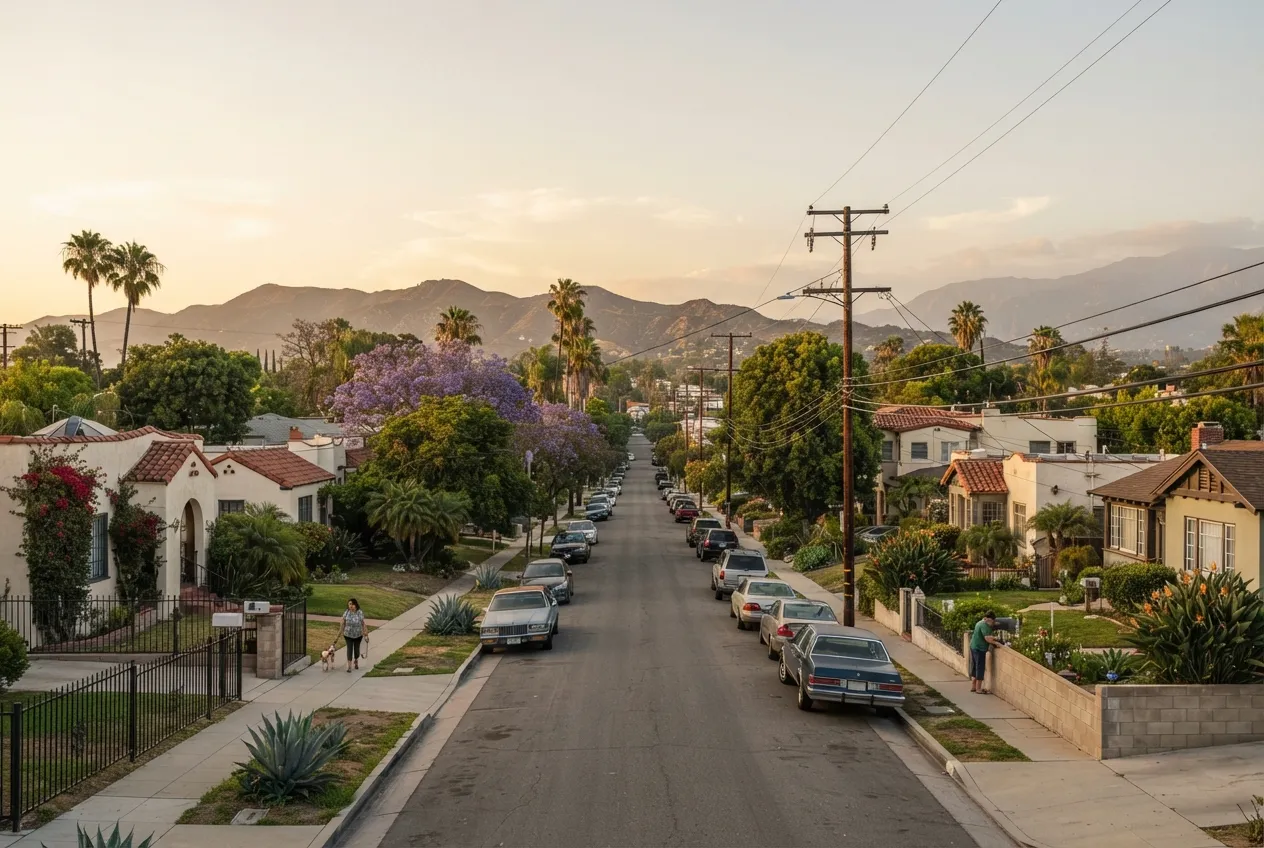
A new air conditioner is a big decision, and in Los Angeles the right choice depends on where you live. A house in the San Fernando Valley or another inland area works its cooling system much harder through a long, dry summer than a home near the coast. Fall Santa Ana winds can also bring hot spells just when you thought the season was over. EverClime HVAC Contractor installs central air conditioners and heat pumps for homeowners in Los Angeles and nearby cities. This page covers how to tell when replacement makes sense, what we look at before recommending equipment, and what to expect on installation day.
Signs It's Time for a New Air Conditioner
Most air conditioners don't fail all at once. They usually give you warnings over a season or two. If you notice several of these, have the system evaluated before the next heat wave rather than during it.
Uneven cooling isn't always the equipment's fault. Leaky or undersized ductwork can make a healthy unit look like it's failing, which is one reason we inspect before recommending anything.
- Rooms stay warm even though the system runs for long stretches
- Repairs are getting more frequent, or the same part keeps failing
- The system uses an older refrigerant that is getting harder to service
- Summer electric bills climb without any change in how you use the house
- Grinding, banging, or loud buzzing comes from the outdoor unit
- You notice humidity, musty smells, or big temperature differences between rooms
- You're remodeling, adding space, or replacing a furnace and want the whole system to match
What We Check Before Recommending a System
A properly sized system cools evenly, runs efficiently, and lasts longer. An oversized unit short-cycles and leaves the air feeling clammy. An undersized one runs nonstop on hot afternoons. We don't size equipment by copying the old unit's label, because many existing systems were never sized correctly in the first place. Before we recommend anything, we look at:
- Home size, layout, ceiling heights, insulation, and window exposure
- How far your home sits from the coast and how hot your summers get
- Ductwork condition, sizing, sealing, and airflow at the registers
- Electrical panel capacity and the circuit feeding the outdoor unit
- Condition and placement of the indoor coil, furnace, or air handler
- Thermostat compatibility and the condition of the refrigerant line set
- Where the outdoor unit can sit with good clearance and minimal noise for you and your neighbors
Repair or Replace: Your Options
Not every problem calls for a new system. If your air conditioner is in reasonable shape and the issue is a single failed part, such as a capacitor, fan motor, or contactor, a repair is often the sensible choice. We'll tell you when that's the case.
Replacement usually makes more sense when the system is near the end of its service life, needs a major component like a compressor or coil, or has a history of repeat breakdowns. If you do replace, you generally have three paths:
We'll walk you through the tradeoffs for your home, including efficiency, comfort, noise, and what each option means for future maintenance.
- Replace the outdoor condenser and indoor coil as a matched set, and keep your existing furnace if it's in good condition
- Replace the full system, including the furnace or air handler, so every component is designed to work together
- Switch to a heat pump, which cools in summer and heats in winter with one system. It's a good fit for LA's mild winters.
What Affects the Cost of a New AC
Every installation is quoted for the specific home. These factors have the biggest effect on the cost:
We give you a written, itemized quote so you can compare options side by side.
- System type: central AC only, AC with a new furnace, or a heat pump
- Capacity and efficiency ratings (SEER2 for cooling, HSPF2 for heat pump heating)
- Single-stage, two-stage, or variable-speed equipment
- Whether the ductwork needs sealing, repair, resizing, or replacement
- Electrical upgrades, such as a new circuit or panel work
- How easy it is to reach the attic, crawlspace, or equipment closet
- Permits and inspections required by your city
- Add-ons like zoning, a smart thermostat, or better air filtration
Rebates, Rules, and Incentives in the LA Area
If LADWP provides your electricity, you may be able to apply for a Consumer Rebate Program rebate on a qualifying heat pump system. The amount depends on the unit's SEER2 and HSPF2 ratings. You apply after the equipment is purchased and installed, within 12 months of purchase. Many homes outside the City of Los Angeles are served by Southern California Edison instead, so the rebates available to you depend on your utility. We confirm the current offer for your address before including it in a quote.
The federal Energy Efficient Home Improvement Credit covered qualifying heat pumps placed in service before December 31, 2025. It does not apply to new installations now. If your project includes a new gas furnace, keep in mind that South Coast AQMD Rule 1111 limits emissions from furnaces sold and installed in the region. The district has been amending the rule toward zero-emission requirements, so we check the current rule before recommending a furnace.
How an Installation Visit Works
Here's what to expect from your first call to a finished system:
A straightforward replacement is often finished in a day. Jobs that involve new ductwork or electrical upgrades can take longer, and we'll tell you up front.
- Home assessment: a technician inspects your current system, ductwork, and electrical, and asks about any comfort problems you've noticed
- Options and quote: we explain the choices that fit your home and give you a written quote
- Scheduling and permits: we set an installation date and pull any permits your city requires
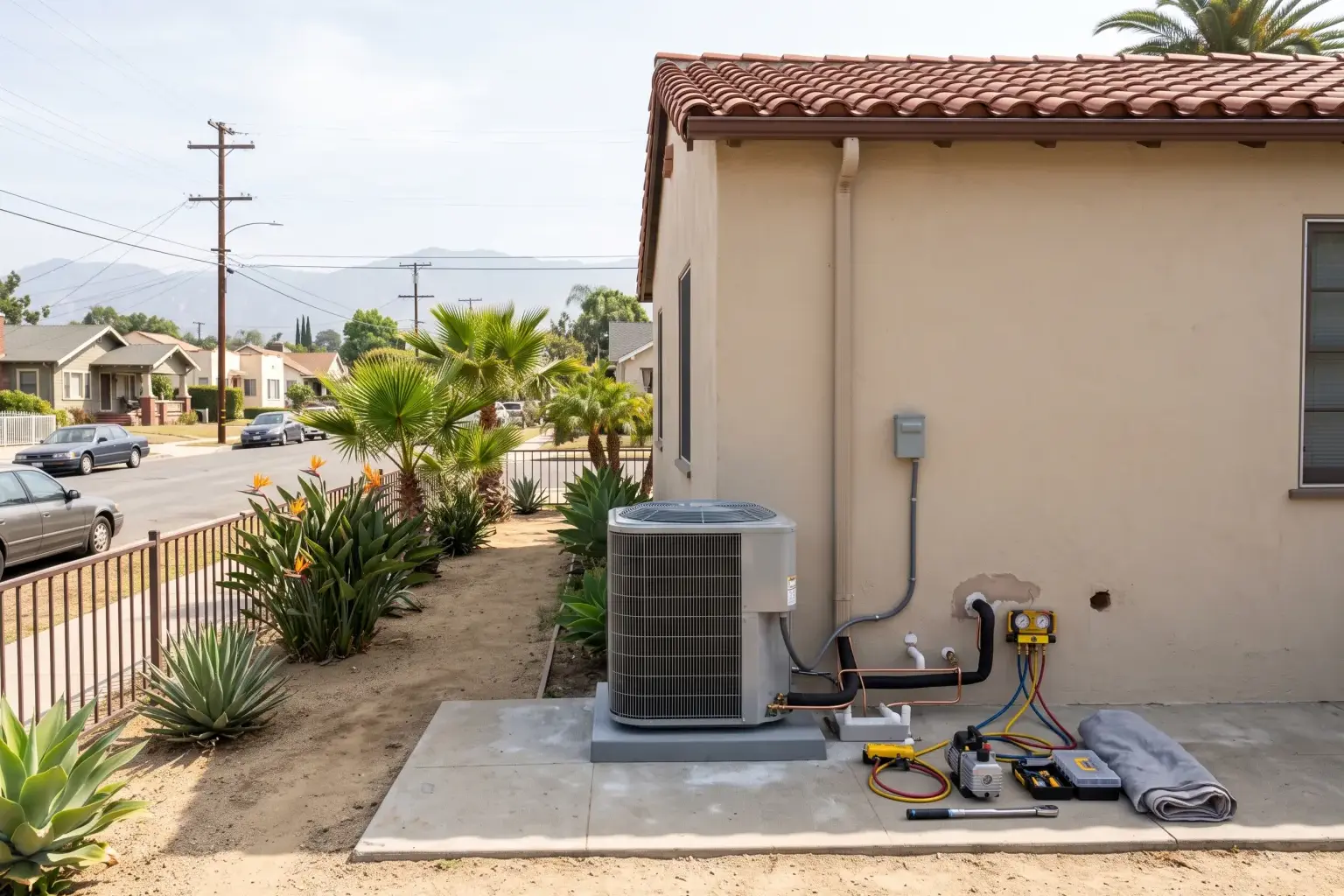
- Installation day: the crew protects your floors, removes the old equipment, installs the new system, and connects the refrigerant lines, electrical, drainage, and controls
- Startup and testing: we check refrigerant charge, airflow, temperature split, and thermostat operation
- Walkthrough: we show you how to use the thermostat and change the filter, and explain what maintenance the system needs
AC Installation by city
- AC Installation in Gardena
- AC Installation in Inglewood
- AC Installation in Huntington Park
- AC Installation in Compton
- AC Installation in Lynwood
- AC Installation in Hawthorne
- AC Installation in South Gate
- AC Installation in Vernon
- AC Installation in Cudahy
- AC Installation in Lawndale
- AC Installation in Maywood
- AC Installation in Bell