The short answer
Regular HVAC maintenance keeps furnaces, air conditioners, and heat pumps running efficiently and catches worn parts before they fail during a heat wave or cold snap. Schedule a visit at least once a year, or sooner if you notice weak airflow, odd noises, or rising bills.
Heating and cooling systems in Los Angeles work in uneven bursts. A furnace may sit idle for months, then run hard on a few cold nights. An air conditioner in the Valley or another inland neighborhood can run for long stretches through a hot summer and again during fall Santa Ana spells. Routine maintenance catches the small problems that build up between those busy stretches, such as dirty filters, weak capacitors, clogged drain lines, and loose wiring. EverClime HVAC Contractor services furnaces, central air conditioners, and heat pumps in homes across Los Angeles and nearby cities.
Signs Your System Needs Maintenance
Most systems give warning signs before they fail. If you notice any of the following, schedule a maintenance visit before the next heat wave or cold snap.
A burning smell that doesn't fade after the first few minutes of the season is not a routine maintenance issue. Neither is any smell of gas. Turn the system off. Call your gas utility or a technician right away.
- Rooms that heat or cool unevenly, or airflow that feels weaker than it used to
- The system turning on and off in short cycles
- Utility bills rising when you haven't changed how you use the system
- New noises at startup, such as rattling, buzzing, squealing, or banging
- A dusty, musty, or burning smell when the system starts
- Water pooling near the indoor unit or around the drain line
- Ice on the refrigerant lines or outdoor coil while cooling
- More than a year since anyone looked at the system
What We Check During a Maintenance Visit
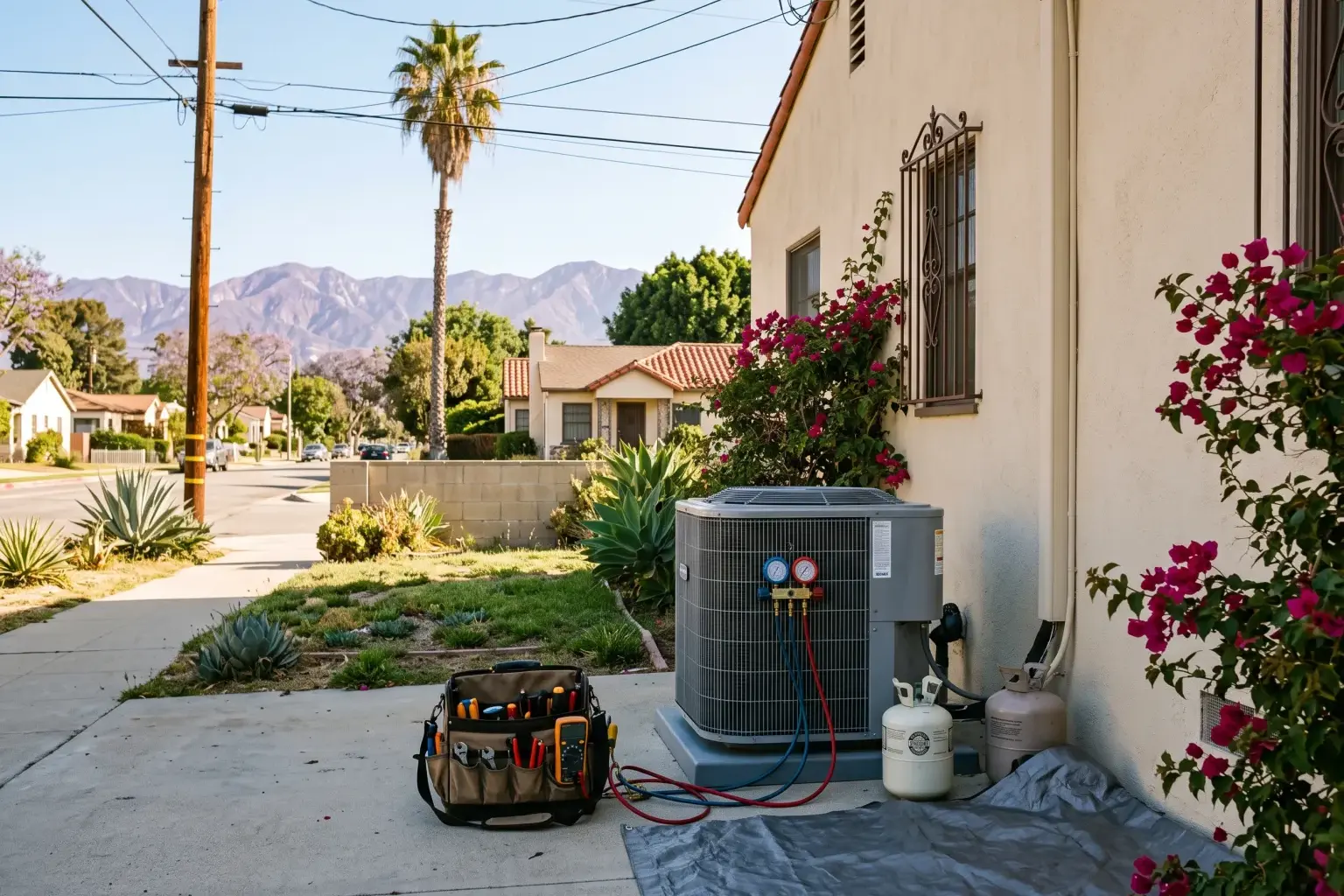
A maintenance visit includes a hands-on inspection, cleaning, and test of the whole system. The exact checklist depends on whether you have a gas furnace, a central air conditioner, a heat pump, or a combination.
Dust is a big factor here. Dry summers and windy fall days push fine dust into outdoor coils and return vents. That makes coil cleaning and filter checks more important than many homeowners expect.
- Air filter condition and size, with replacement if you have the right filter on hand or ask us to supply one
- Thermostat settings, calibration, and wiring
- Electrical connections, capacitors, contactors, and motor amperage
- Blower motor and wheel, checked for dirt buildup and wear
- Outdoor condenser coil, cleared of leaves, dust, and debris
- Refrigerant pressures and the temperature difference across the indoor coil
- Condensate drain line and pan, flushed and checked for clogs
- On gas furnaces: burners, flame sensor, igniter, a visual check of the heat exchanger, flue venting, and safety switches
- On heat pumps: reversing valve operation and defrost function
- Reachable ductwork, checked for disconnected sections or obvious leaks
Repair or Replace: What Maintenance Can Tell You
Maintenance often turns up parts that are worn but still working. When that happens, we explain what we found and lay out your choices. Where possible, we show you photos or the part itself. Many issues are routine repairs, such as a failing capacitor, a dirty flame sensor, or a clogged drain. Bigger problems, such as a cracked heat exchanger or a compressor near the end of its life, raise the question of whether to repair or replace.
To help you decide, we look at four things: - How old the equipment is - How often it has needed repairs - The condition of major components - Whether the system is sized well for your home We give you a straight comparison. The decision is yours.
If you are considering a new system, a few local rules and programs matter: - **Gas furnace rules:** South Coast AQMD Rule 1111 limits NOx emissions from natural-gas central furnaces sold and installed in the Los Angeles region. The district has been amending the rule toward zero-emission requirements, and it sets and revises the compliance dates. Check the current rule before planning a furnace replacement. - **LADWP rebates:** LADWP residential electric customers can apply for rebates on qualifying heat pump systems. The amount depends on the unit's SEER2 and HSPF2 ratings. You file the application after the equipment is purchased and installed, within 12 months of purchase. - **Other utilities:** Many homes outside the City of Los Angeles are served by Southern California Edison instead, so the rebates available to you depend on your utility. We confirm the current offer before quoting it. - **Federal tax credit:** The federal 25C credit covered heat pumps placed in service before December 31, 2025. It is not available for new installations now.
What Affects the Cost of Maintenance
We quote maintenance after we know what equipment you have. These are the main factors that change the scope of a visit.
If we find something that needs repair, we tell you what it is and what it will cost before doing the work. Nothing extra happens without your approval.
- Type and number of systems: a furnace, an air conditioner, a heat pump, or a combined system
- How long it has been since the last service, and how much cleaning the coils and blower need
- How easy it is to reach equipment in attics, crawl spaces, closets, or on rooftops
- Filter type and size, especially media filters or less common sizes
- Whether repairs or parts are needed beyond the standard checklist
- Whether you choose a one-time visit or regular seasonal visits
How a Maintenance Visit Works
**Scheduling:** You pick a time that works for you. Fall is a good time for heating checks and spring for cooling checks, ahead of the busy seasons. We can service a system any time of year.
**The visit:** The technician starts by asking about any problems you've noticed. Then they work through the checklist for your equipment, indoors and out. Most single-system visits take a couple of hours or less. Heavy cleaning or more than one unit can take longer.
**Wrap-up:** Before leaving, the technician walks you through what was done, the condition of the system, and anything to watch for. If they recommend repairs, you get a clear explanation and a written quote. You decide whether and when to move ahead.
**Between visits:** - Check your filter monthly. - Keep a couple of feet of clearance around the outdoor unit. - Keep supply and return vents uncovered.